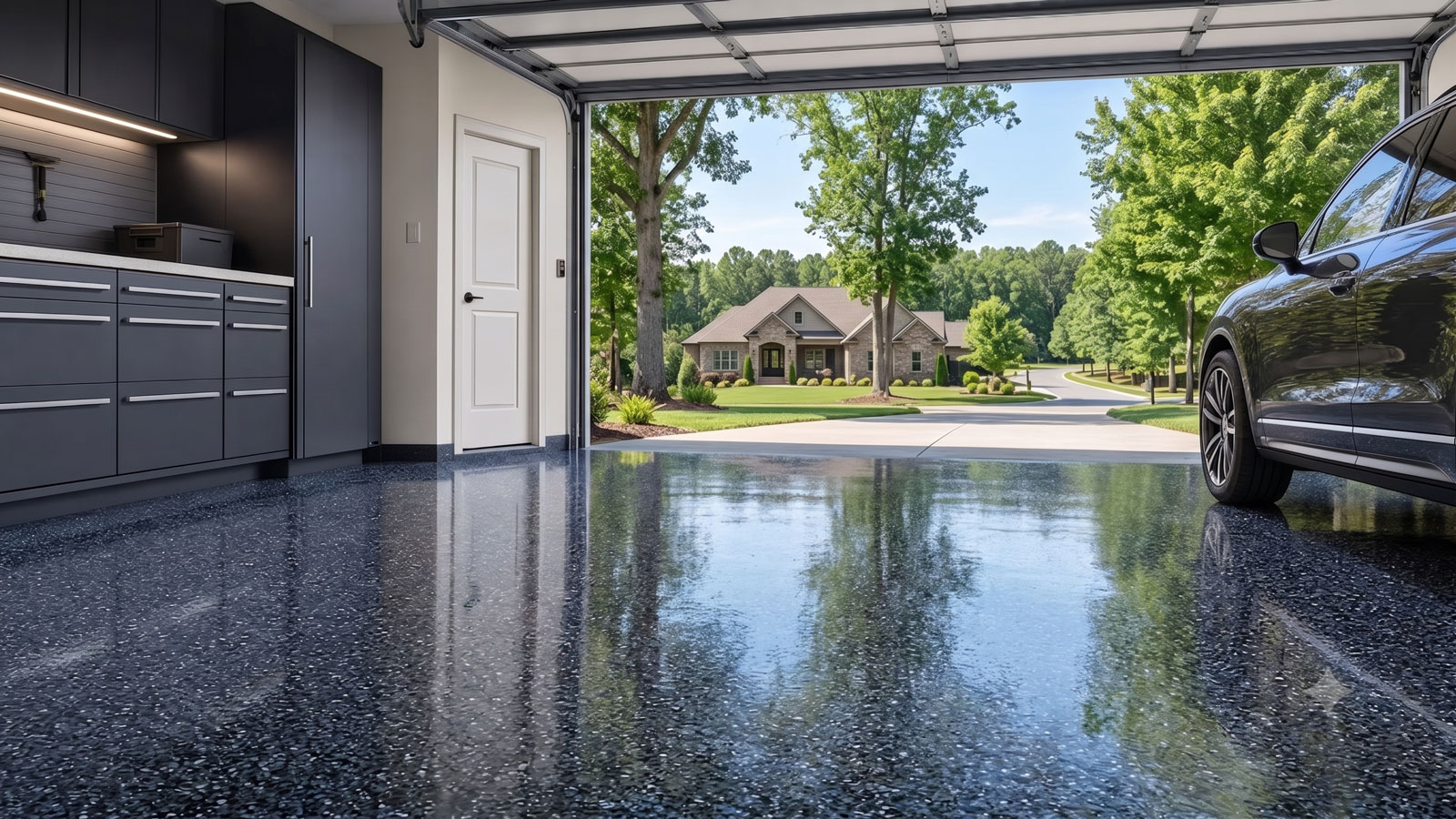
Garage Floor Coating in Bowling Green, VA
Floor Coating Services in Bowling Green, VA
Bowling Green's floor-coating decisions begin with its distinct building history: Caroline County's 2030 Comprehensive Plan includes a specific Bowling Green–Milford appendix; the town was reviewing an update in 2026, not announcing a completed replacement. That means homeowners may encounter older town-center residences, garages added later and more rural Caroline County lots. Neither an early planning date nor a new development proposal tells the homeowner when their garage concrete was poured.
A second local consideration is Caroline County's local drainage systems and broader Chesapeake Bay resource planning. The town's July and August 2026 Planning Commission agendas show a plan still being drafted, so future land-use recommendations must not be described as already built. Public land-use and natural-resource maps give context, not a moisture report on a private garage.
For practical Bowling Green projects, small-town lot entries, detached workshops and winter parking space can influence the labor scope. Sound concrete may benefit from epoxy, polyaspartic or decorative flake because an intact finish is easier to clean. Yet cleaning, mechanical profiling, cracks and joints must come first. Ask for a written description of previous-film removal, repairs, complete layers, finish texture, suitable application weather and when vehicles can safely return.
Local Market Insight
Caroline County's 2030 Comprehensive Plan includes a specific Bowling Green–Milford appendix; the town was reviewing an update in 2026, not announcing a completed replacement. The town's July and August 2026 Planning Commission agendas show a plan still being drafted, so future land-use recommendations must not be described as already built.
What Affects the Cost of Garage Floor Coating in Bowling Green?
An estimate near older town-center residences, garages added later and more rural Caroline County lots must account for surface age, paint, oil, repair sections and equipment access.
Because local water planning concerns Caroline County's local drainage systems and broader Chesapeake Bay resource planning, the homeowner should distinguish actual drainage corrections from grinding, slab moisture assessment where warranted, crack repairs, system layers, traction and parking-return timing.
- Actual pour and building chronology: In Bowling Green, older town-center residences, garages added later and more rural Caroline County lots.
- Previous coatings and contaminants: Draft policies are not evidence of new garages already constructed. Check whether old paint, builder sealer or oil needs removal before mechanical profiling.
- Threshold runoff and moisture: The Caroline County's local drainage systems and broader Chesapeake Bay resource planning context is not a residential moisture test.
- Cracks, joints and door edges: Town-center detached garages may be accessed differently from rural Caroline outbuildings. Evaluate stable cracking, joints that still move and any deteriorated doorway separately; a finish cannot repair structural damage.
- Machinery access and storage: Local conditions may include small-town lot entries, detached workshops and winter parking space.
- Winter texture and cure: Caroline County's 2030 plan includes a Bowling Green–Milford appendix. Winter grit and meltwater still need cleaning; request appropriate traction plus product-specific temperature and vehicle-return limits.
Call for a clear, project-specific estimate — or request one online.
How Bowling Green's Building Patterns Change Garage Preparation
Caroline County's 2030 Comprehensive Plan includes a specific Bowling Green–Milford appendix; the town was reviewing an update in 2026, not announcing a completed replacement.
Draft policies are not evidence of new garages already constructed. An older garage can contain paint and patching, while a recent slab may retain curing compound. Inspect oil, joints, door edges and the real concrete profile before choosing an epoxy or polyaspartic system.
The practical cost may also reflect small-town lot entries, detached workshops and winter parking space. A quoted square-foot price can miss steps, complicated edges, storage, equipment movement and waste removal. Ask that bids spell out stripping, grinding, stable crack repair, joint handling and masking.
Caroline County's 2030 plan includes a Bowling Green–Milford appendix. After inspecting soundness, compare complete preparation and layered coating systems. Decorative flakes can help cleanup but cannot disguise movement or a poorly bonded previous film.
What Caroline County's local drainage systems and broader Chesapeake Bay resource planning Means for a Garage Threshold
The town's July and August 2026 Planning Commission agendas show a plan still being drafted, so future land-use recommendations must not be described as already built. This documented distinction is relevant to stormwater and land-use decisions in Bowling Green, yet it does not demonstrate that a particular garage has ever flooded.
The town was still reviewing comprehensive-plan chapters in summer 2026. Trace roof runoff, driveway grade and drains at the garage opening. Old water marks or persistently dark concrete may need evaluation separate from puddles deposited by wet vehicles.
Winter vehicles also bring salty slush, grit and sand into garages well away from Caroline County's local drainage systems and broader Chesapeake Bay resource planning. A properly bonded continuous coating can make routine cleaning easier, but owners still need to remove abrasive debris and standing liquids.
Town-center detached garages may be accessed differently from rural Caroline outbuildings. Fix repeated outside entry before coating; assess possible internal moisture against the selected product requirements. Then specify cleaning, grinding, stable repairs, layers and cure time.
Frequently Asked Questions
Does Caroline County's local drainage systems and broader Chesapeake Bay resource planning mean my Bowling Green garage has moisture trouble?
No. The town's July and August 2026 Planning Commission agendas show a plan still being drafted, so future land-use recommendations must not be described as already built.
Are older Bowling Green homes automatically harder to coat?
No. Caroline County's 2030 plan includes a Bowling Green–Milford appendix. Existing garage concrete may have been repoured, or newer floors may have sealer. Assess actual coatings, cracks and soundness.
Can a decorative floor coating stop driveway runoff in Bowling Green?
No. The town was still reviewing comprehensive-plan chapters in summer 2026. Outside runoff needs grade, drainage or threshold correction before a decorative coating can be considered.
What should I compare in two Bowling Green floor estimates?
Draft policies are not evidence of new garages already constructed. Compare film removal, grinding, cracks, joints, moisture review if warranted, complete coating layers, texture, access and vehicle-return timing.
Does a coated Bowling Green garage eliminate winter road-salt cleanup?
No. Town-center detached garages may be accessed differently from rural Caroline outbuildings. A sound coating may simplify cleaning, but road grit, winter salt and pooled water still require regular removal.
Bowling Green Neighborhoods & Local Context
Phone Quote Line
Speak with a floor coating specialist about your project and get a realistic estimate range.
(540) 779-8797Typical Project Cost
$3,000–$5,500
Typical range for a standard two-car garage. Final pricing depends on floor size, concrete condition, prep work, coating type, and finish options.
Helpful Guides